
A plant identifier sounds like a small app idea. Until you look at the revenue.
The same photo-to-answer format turns up in apps for coins, rocks, birds, and collectibles. Some have hundreds of thousands of ratings. Several have published revenue estimates large enough to make you look twice.
Here are six niches to study, the revenue behind them, and the factors to check before building an identifier app.
How much money do AI identifier apps make?
Published app-intelligence reports give a sense of the market's scale:
| App | Published estimate | Market and period |
|---|---|---|
| PictureThis | Nearly $14 million in net revenue | US, 2021 year to date as reported in June |
| CoinSnap | Revenue around $160,000 in the weekly series | US, Q2 2025 |
| CoinIn | Revenue reached about $136,000 toward the quarter end | US, Q2 2025 |
Sources: Appfigures on PictureThis and Sensor Tower's Q2 2025 reference-app report. These are third-party estimates with different reporting periods and definitions.
Revenue isn't profit. Advertising, store fees, refunds, support, and AI calls all cost money. Still, these examples show that people pay for identification across more than one niche.
1. Plants: PictureThis
PictureThis combines plant identification with care information and related tools. Its US App Store listing showed about 1.1 million ratings when checked on October 12, 2026.
The appeal is easy to understand. Someone sees an unfamiliar plant or a leaf that looks wrong. They want an answer while they're standing in front of it.
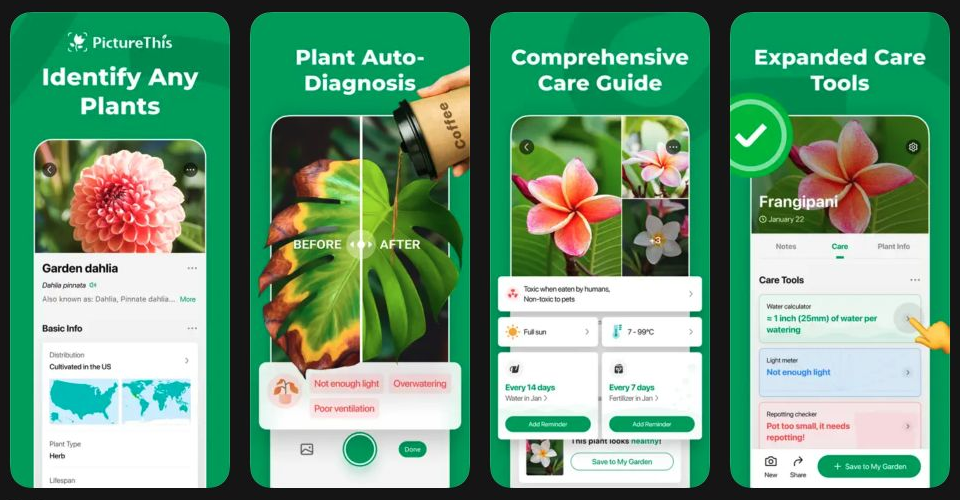
Care tasks also give the app a reason to be opened again. Finding a name may take one scan. Looking after the plant continues for months.
2. Stamps: Stamp Scanner
Stamps can look almost identical while differing in paper, perforations, or watermark. Collectors need help narrowing the possibilities and deciding which detail to inspect next.
Stamp Identifier app organizes clues about the issuing country, denomination, design, and likely issue alongside the photos.
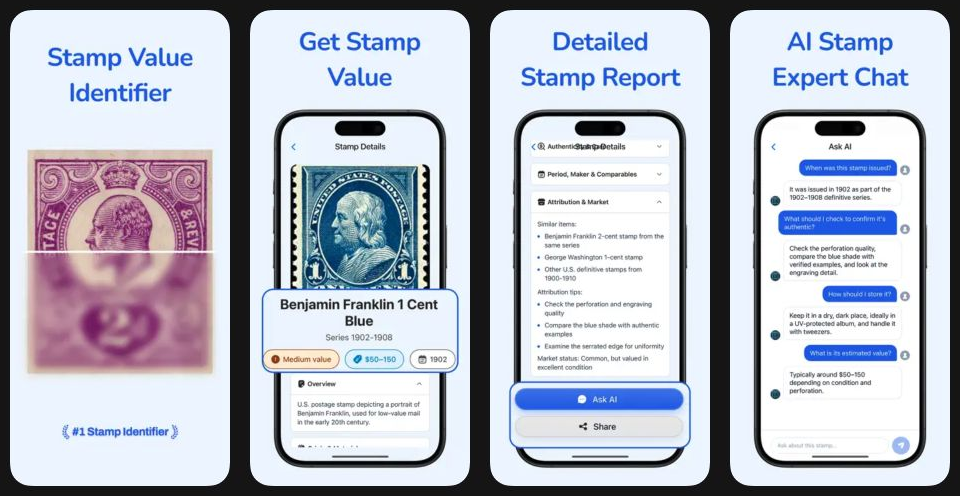
A useful result should say which details remain uncertain. An exact-looking name can be misleading when the photograph doesn't resolve the difference between two issues.
3. Rocks and minerals: Rock Identifier
Rock Identifier applies the same idea to stones, minerals, and crystals. Its listing includes reference information and collection records.
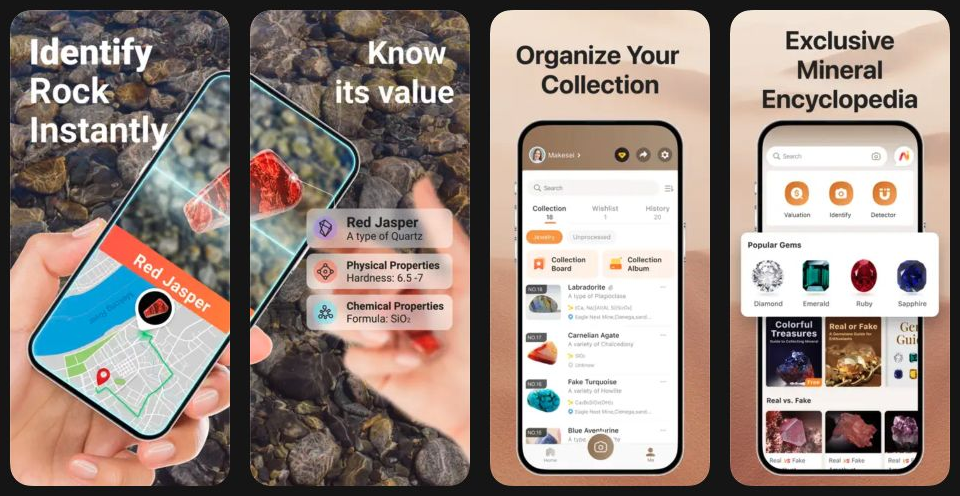
A person finding a stone outdoors may want a quick identification. At home, they may want to compare it with other finds or record where it came from. Those are two useful occasions for the same app.
4. Banknotes: Banknote Identifier
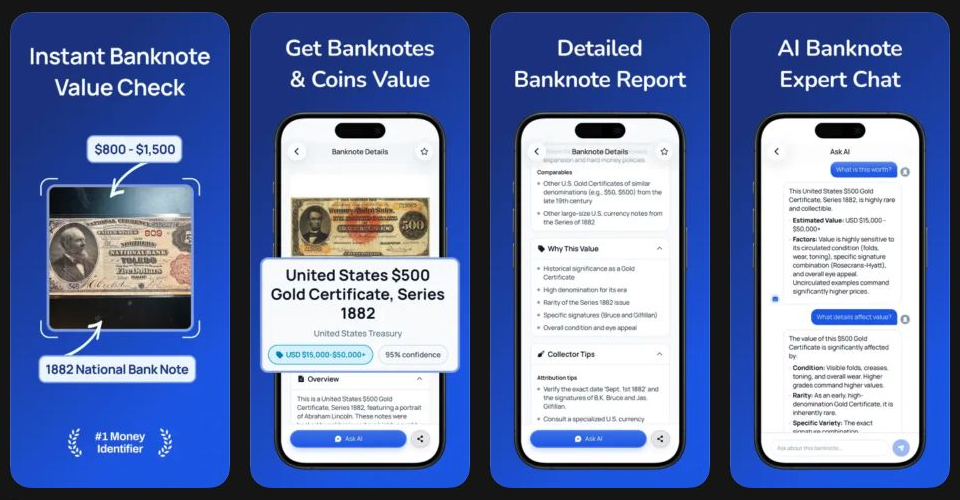
Paper money presents a related problem. An unfamiliar note may have visible clues about its issuer and denomination, while the exact series takes more research.
Banknote Identifier brings those details into one record so collectors can revisit them later.
5. Coins: CoinSnap and CoinIn
Collectors often want to know which issue they have, whether a small detail matters, and where to look next. That leaves room for a much richer result than an object name.
CoinSnap offers identification, collector information, estimated values, and collection organization. Its US listing showed about 307,000 ratings on the same date. CoinIn's inclusion in the Sensor Tower report gives us another commercial example in this niche.
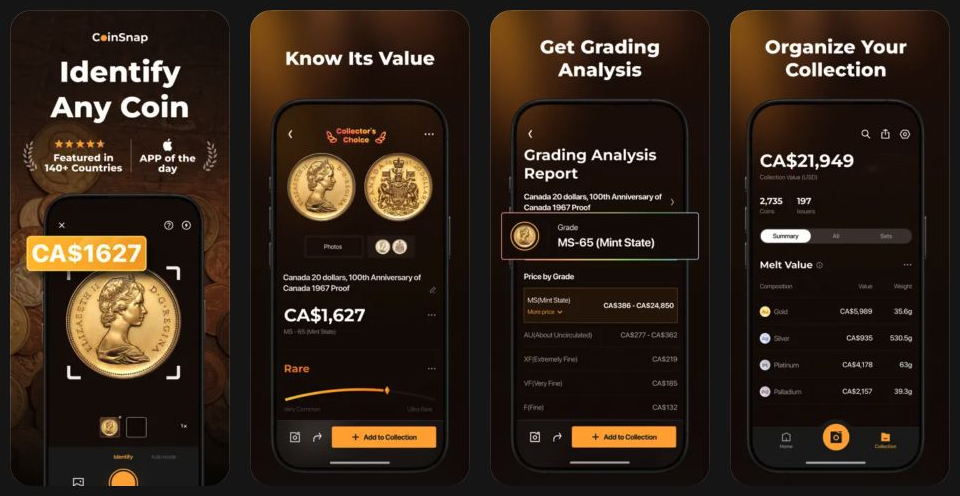
A saved collection can be useful long after the first scan. But identification and valuation need different evidence. A likely match doesn't automatically establish condition, authenticity, or what a buyer will pay.
6. Birds: Picture Bird
An identifier doesn't have to rely on photos. Picture Bird accepts photos or recordings and includes species information and saved observations. Its US listing showed about 40,000 ratings when checked.
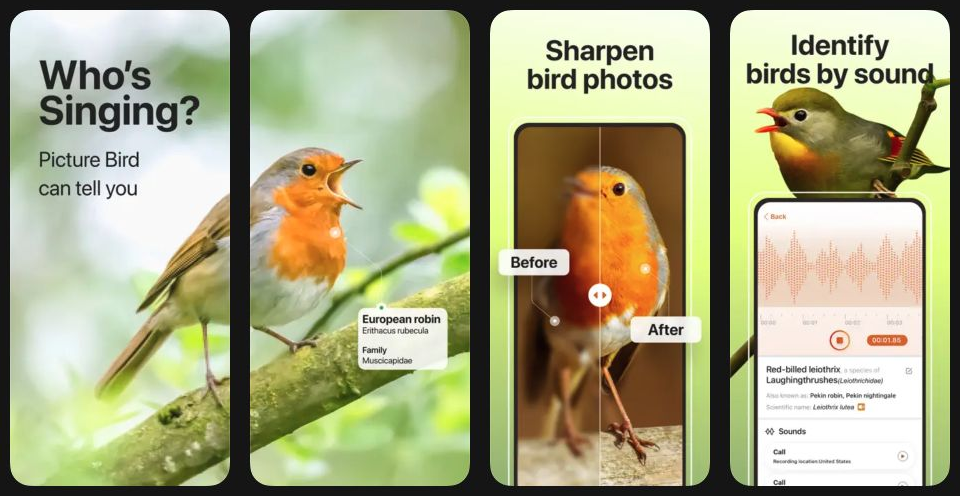
Sometimes you hear a bird without seeing it. Recording its call is more practical than chasing a photograph. The lesson for another niche is to start with the evidence people can easily collect.
Why use an identifier app instead of ChatGPT?
If the whole app is a photo upload followed by a paragraph, general AI tools are serious competition.
A dedicated app can remove work from the rest of the task. It can explain how to take the photo, request another view, put the result into familiar fields, and save it as part of a collection. The user doesn't have to write a new prompt explaining what matters to a collector each time.
That's where knowledge of the hobby pays off. You know which details people compare, which mistakes cause trouble, and what happens after identification. Put that knowledge into the product and its reference material.
How to choose an identifier niche
Start with competitor reviews and the places where the hobby happens. Which objects confuse people? What do they use now? What do they still have to do manually after trying an app?
Check four things:
- Search demand. Research the actual terms and competing listings. The App Store keyword research guide covers that process.
- Answer quality. Test known examples, damaged objects, poor photos, and lookalikes. One clean demo image proves very little.
- Repeat use. Look for new finds, care tasks, or collection records that give someone a reason to return.
- Costs. Include acquisition, model calls, storage, refunds, support, and store fees before deciding what to charge.
Subscriptions are common in the category, but scan packs or paid collection tools may fit some audiences better. Test the pricing with users before copying a competitor's paywall.
For the launch setup, see the mobile app development guide. For comparing markets across languages, see the ASO automation workflow.
Choose a niche where you can improve the answer or the work that follows it. Pottery marks, vintage tools, and trading cards are other areas to research.